BLOG: How Kanye West's Controversial "Jesus Is King" Is Dividing the Christian Community
- Apr 16, 2022
- 4 min read
On Jesus Is King; Kanye West depicts himself as a lonely martyr barred from the Christian kingdom.
“They’ll be the first one to judge me / Make it feel like nobody love me,” he says of Christians in “Hands On.” In another track, “Selah,” he compares himself to a Biblical patriarch: “Before the flood, people judge / They did the same thing to Noah.”
West has certainly received a fair amount of backlash for his hard turn toward spiritual music. On Twitter, blog posts and published articles, black Christians have frequently accused West of hypocrisy and commodification — especially given his support of Donald Trump and his eyebrow-raising comment that slavery “sounds like a choice.”
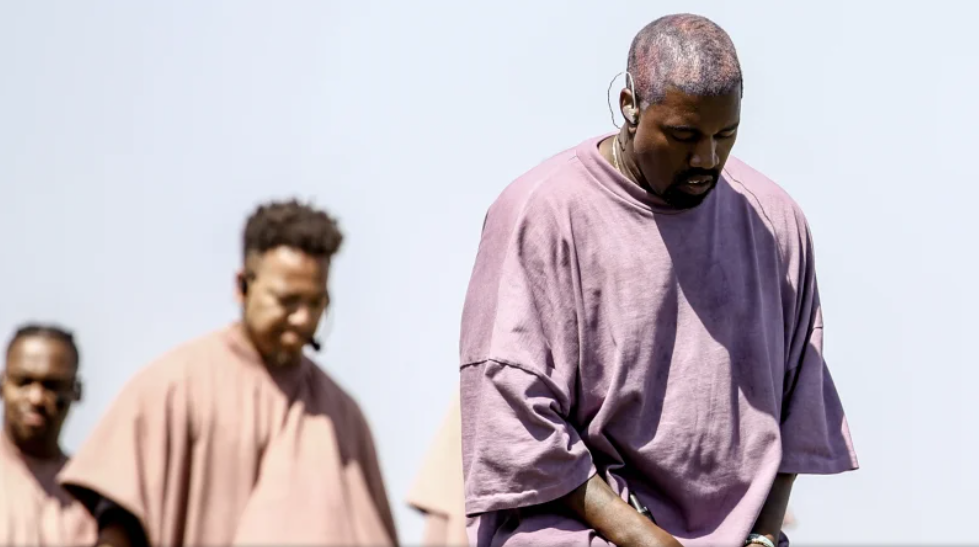
But West has also received a groundswell of support— particularly from gospel artists themselves. Many of these musicians believe that no matter what they think about West’s politics, it’s more important that a prominent artist with an enormous reach is relying on gospel traditions to talk fervently about God.
Closed On Sunday | Kanye West Music Video
“The traditional Christian church has always frowned upon anything that is new and innovative,” Richard Smallwood, the renowned gospel singer and songwriter, tells TIME. “He’s singing about Jesus Christ and God—and that, to me, is the bottom line.”
So while West paints “the Christians” as a monolith, in actuality his spiritual recommitment has opened up fissures in the black Christian community, with listeners on both sides believing that Jesus Is King has the potential to be a turning point for gospel music — for better or worse. Take a closer look at how West’s latest offering is dividing many in the spiritual community.
“Is Christ really at the center?”
In January 2019, West began his Sunday Service performance series in Calabasas, California, with the choir group The Samples and other collaborators performing a combination of hymns and secular pop songs rewritten with Christian themes. (Ginuwine’s sex jam “So Anxious,” for example, became “Souls Anchored.”) As the performances unfolded over the months, they drew skepticism from many online, who wrote that the exclusive, invitation-only events ran contrary to the open, communal spirit of church. Tobi Oredein, writing in Premier Christianity magazine, also pointed to the seemingly megalomaniacal nature of the events: “He’s employed a choir of people who are not only singing his songs, but are all dressed in his apparel. Is Christ really at the center of this gathering?”
Some of those who made it inside West’s events, however, see it differently. Dr. Ricky Dillard, a Grammy-nominated gospel singer, was invited to a Sunday Service in Malibu in April, and listened as West’s combination of gospel, hip-hop and house music reverberated around him. “It was rejuvenal, inspiring, uplifting,” Dr. Dillard told TIME. “Kanye is a part of the contemporary movement which has revolutionized music.”
Come To Life | Kanye West Music Video
Dillard dismissed the idea that the performances were Kanye-centric. “If you know God and go to one of Kanye’s worship experiences, you will experience God because you know God,” he said. He was also impressed by the way in which West ceded much of his spotlight to the choir group The Samples: “It felt like for the last few years, choirs have either been eliminated or pushed to the back,” he said. “With him coming forward with The Samples, it has turned a light on.”
“It has to reach the young people”
The choir takes a more ancillary role in Jesus Is King, which was released Oct. 25. The album mixes choral refrains, soul samples, trap drums and West’s signature autotune, as he raps about not only Jesus but Chick Fil-A and the IRS. But while the album’s sound and subject material stray from traditional gospel, his prominent predecessors say West’s modernizations are not only musically intriguing but essential toward the genre’s evolution.
Smallwood, a member of the Gospel Music Hall of Fame, says that the negative reaction to Jesus Is King continues a reactionary sentiment that has run rampant throughout gospel music history. He cites Thomas A. Dorsey—considered the father of black gospel music—and influential urban contemporary gospel singer Edwin Hawkins as two pioneers who initially faced severe resistance when they brought secular musical elements into the church.
“Gospel becomes too exclusive when people describe it,” Smallwood says, adding about Jesus Is King: “I like the sound of the music; I like the arrangements. And it has to be contemporary because it has to reach the young people.”
Praise God | Kanye West - Live, 4 months ago at the Free Larry Hoover Concert
Bishop Marvin Sapp, an eleven-time Grammy nominee, agrees. West sampled Sapp on the 2018 Teyana Taylor song “Never Would Have Made It,” and says that West’s interpolations of him and other artists show that “the gospel music message transcends time.” And while he acknowledges that some of West’s lyrics might be self-centered or silly, he says the widely-ridiculed line about Chick-Fil-A is “a neat concept—just a wonderful angle to come from in order to spread the message of Christ.”
Alisha Lola Jones, a theologian and assistant professor of ethnomusicology at Indiana University Bloomington, says that ostensibly campy lyrics like the Chick-Fil-A line work for West on multiple levels: they ignite controversy, which increases discourse and sales; and they play to a “multiple consciousness” for younger black listeners who grew up listening to both gospel textures and hip-hop one-liners. “While he does gesture toward established gospel sounds and styles, he’s also allowed for a little bit of kitsch,” Jones says. “I can appreciate how he challenges the gospel idea where pitch has to be hit and everybody is a virtuosic singer.”
But Jesus Is King has been received coolly online, with many critics both inside and outside of the Christian community dismissing West’s pledges of faith as surface-level and disingenuous. Alicia Crosby, a minister, educator and activist, says that several key gospel elements—including musical underpinnings and sorrowful narratives—are wholly missing from the work. “You can have ‘Hallelujahs’ on a track, but it doesn’t make it gospel,” she says. “It’s weak theology, it’s not substantive, it’s not glorifying. This will confuse white audiences about what gospel is and isn’t.”


Comments